Community management, built India-first

Your community. One connected place.

Tharavadu brings residents, committees, security, staff and vendors together to run everyday community life — simply.

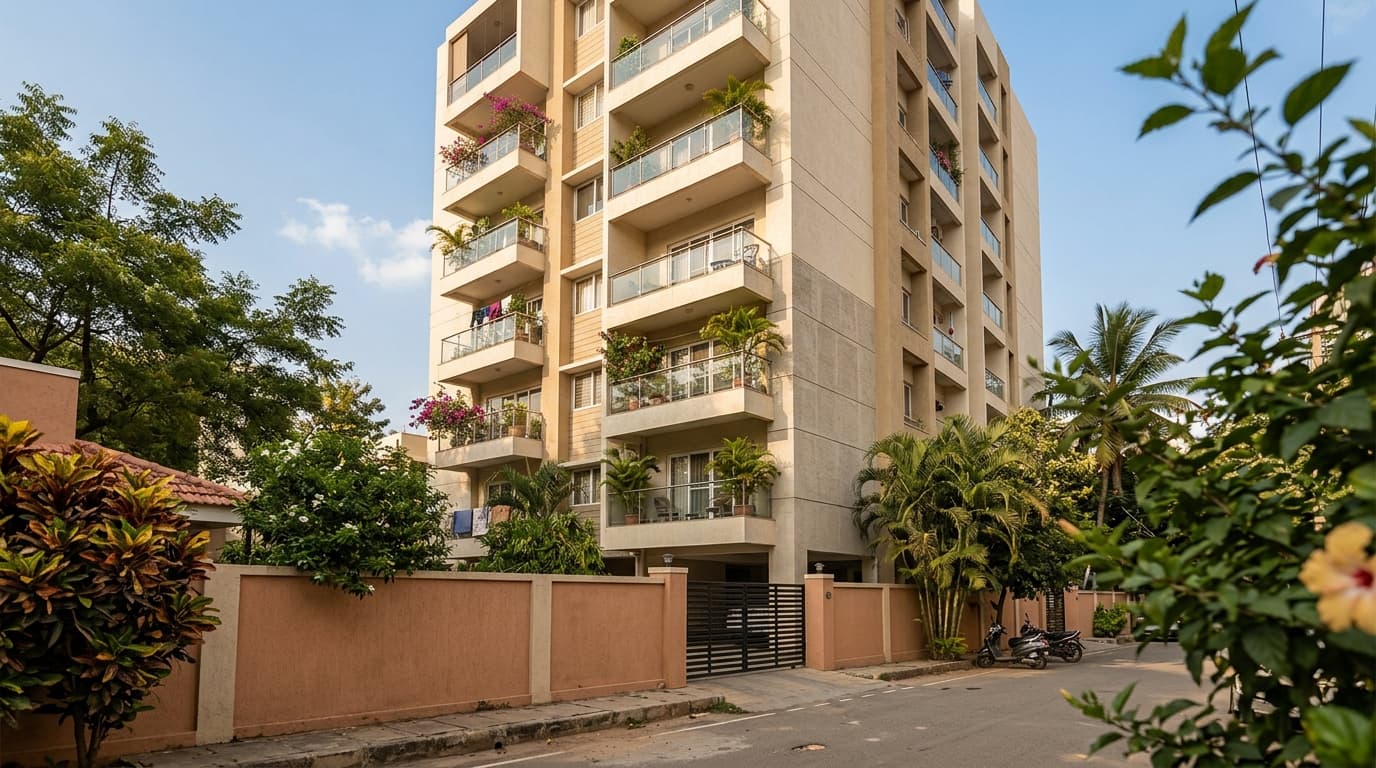
A residential apartment building with planted balconies, seen from the street outside its gate
At the gate, just nowMeera Nair approved a guest for B-704

The problem

Most communities run on six different things.

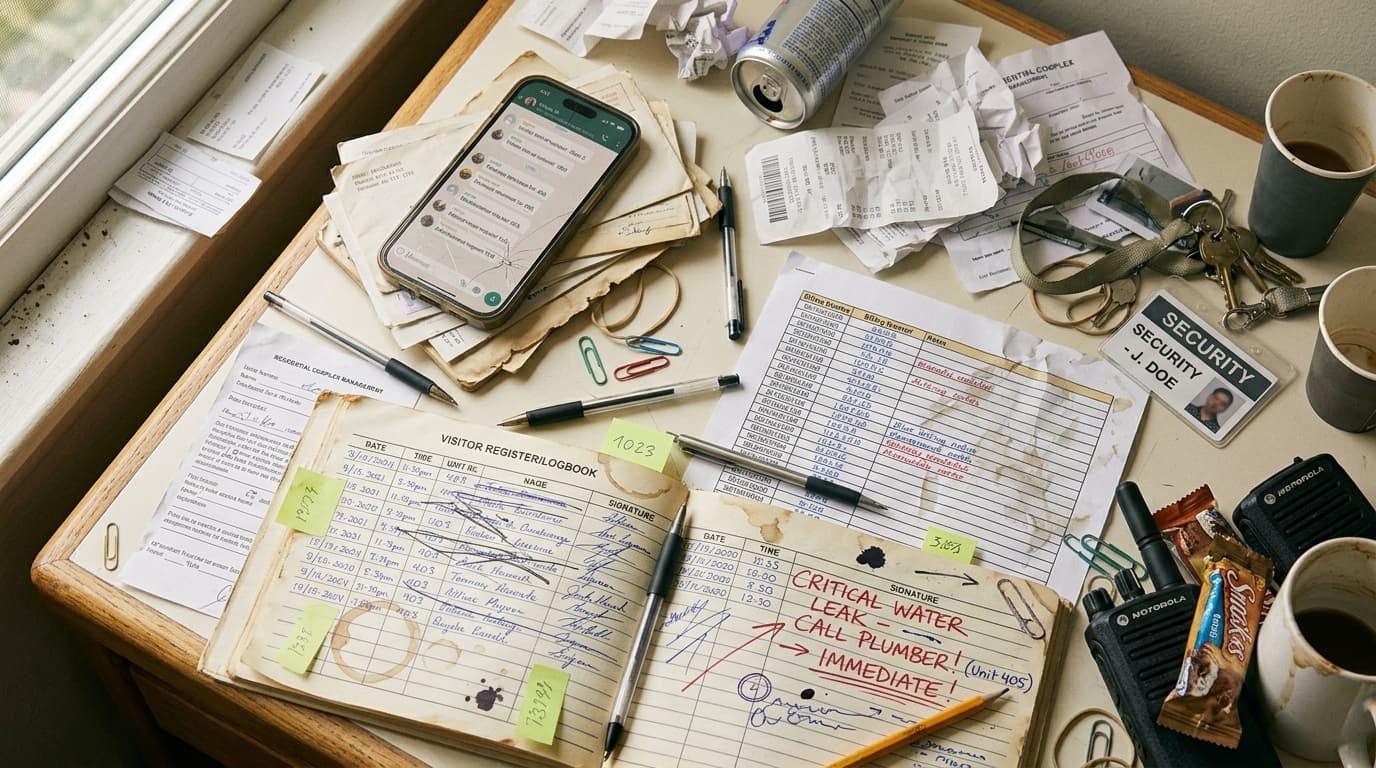
A WhatsApp group for notices. A register at the gate. A spreadsheet for billing. A security guard's memory for who's allowed in. None of it talks to each other, and none of it is anyone's actual job to maintain.

Fragmented tools a community currently relies on: a chat app, a paper register, a spreadsheet, and a security guard's memory, disconnected from each other
WhatsApp group
Gate register
Billing spreadsheet
Guard's memory

What Tharavadu connects

Five groups of people. One shared place to work.

A community isn't one audience — it's several, each needing something different from the same set of facts.

  1. ResidentsRaise a request, book the clubhouse, approve a guest, pay a bill.
  2. CommitteeDecide, record and account for it — with a trail that outlasts the term.
  3. SecurityKnow who is at the gate, and who is expected.
  4. StaffSee the day's work without a paper register.
  5. VendorsContracts, jobs and invoices in one thread.

What it does

Built around the jobs a community actually has.

Every module below is real and working today — not a roadmap slide.

Visitor management

The gate register is a paper book, and nobody can tell you who came in last Tuesday.

Pre-invite a guest with a code, approve a walk-in from your phone, and check them in at the gate. Every entry is recorded as it happens.

Learn more
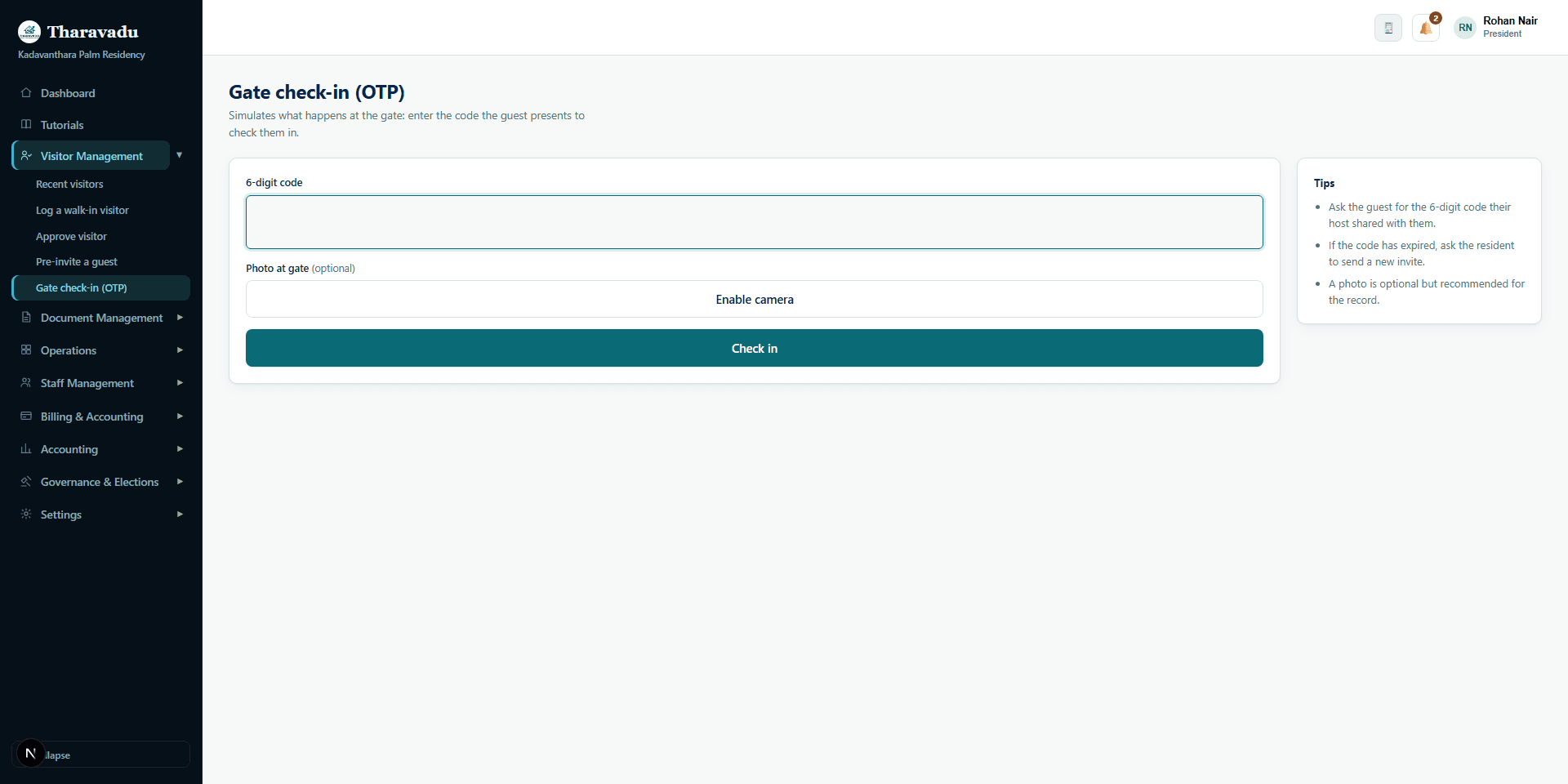
Gate check-in screen with a six-digit visitor code field and optional photo capture

Governance & elections

Decisions live in a WhatsApp thread that scrolls away, and nobody agrees on what was agreed.

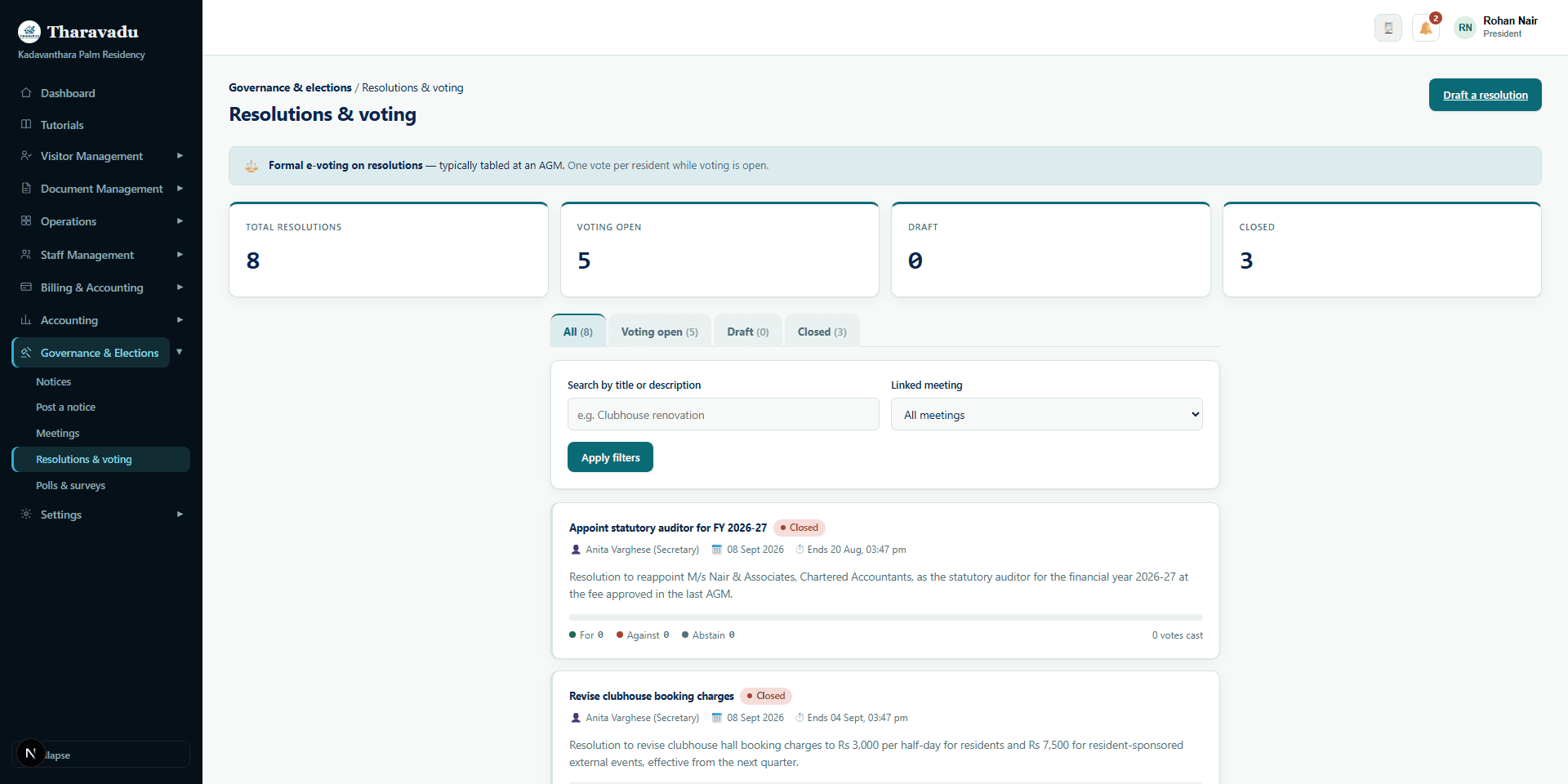
Notices, meetings, resolutions and e-voting, recorded properly — so a decision made this year is still findable in three years' time.

Learn more
Committee resolutions screen showing a vote in progress

Billing & accounting

Dues are chased over phone calls, and the treasurer reconciles them against a spreadsheet.

Per-unit billing rules, UPI collection, receipts and a defaulters view — plus proper financial-period closing when the books have to balance.

Learn more

Web + mobile

Built for whoever's using it, not shrunk down for them.

A treasurer at a desk and a guard at the gate need different things. Both are looking at the same community, updated at the same moment.

console.tharavadu.life

Web console activity appears here

Tharavadu

Mobile notifications appear here

On the phone

The things that can't wait until someone reaches a desk.

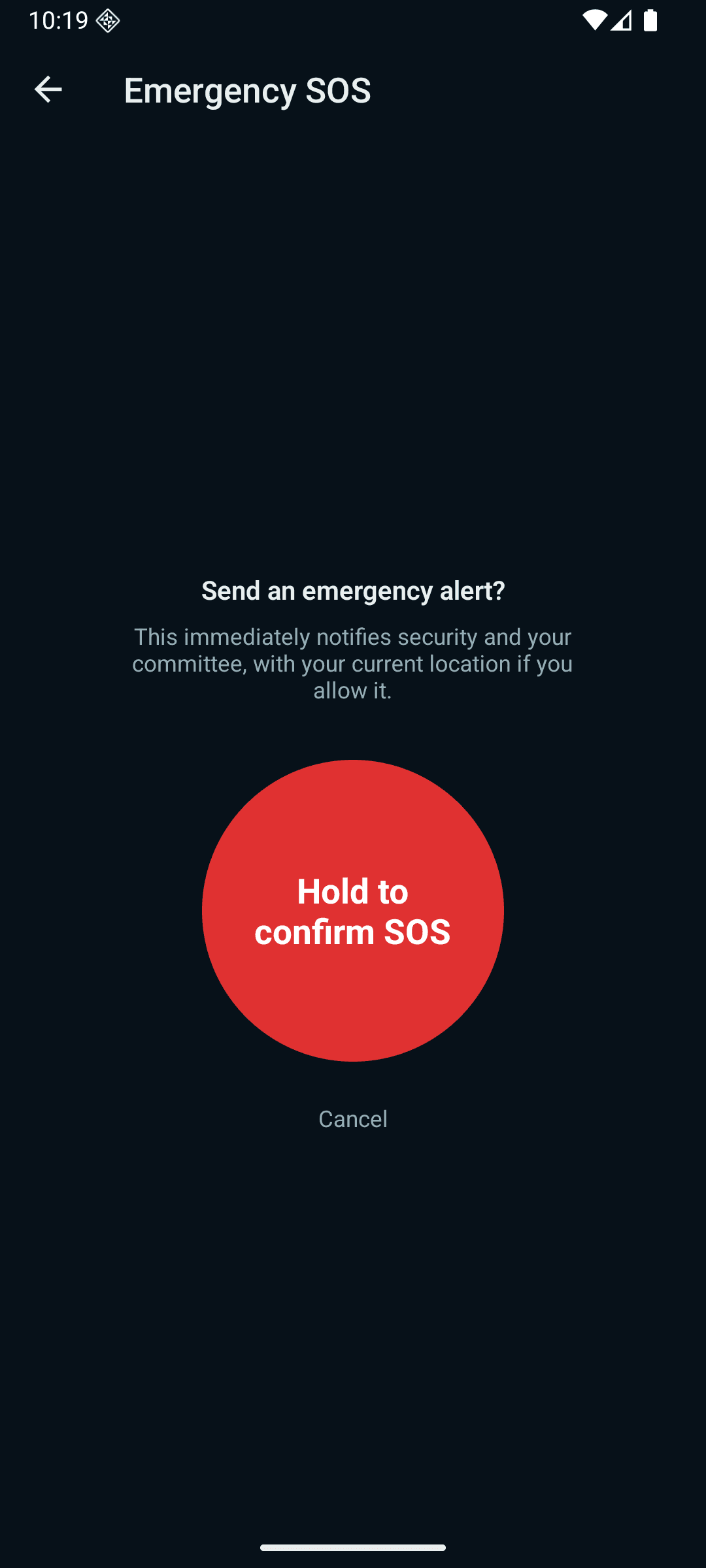
Emergency SOS, two taps from any screen

Hold to confirm, and security and your committee are notified at once — with your location if you allow it. It is on the home screen of every role, for every resident, and it is the one thing a desk-bound system can never do.

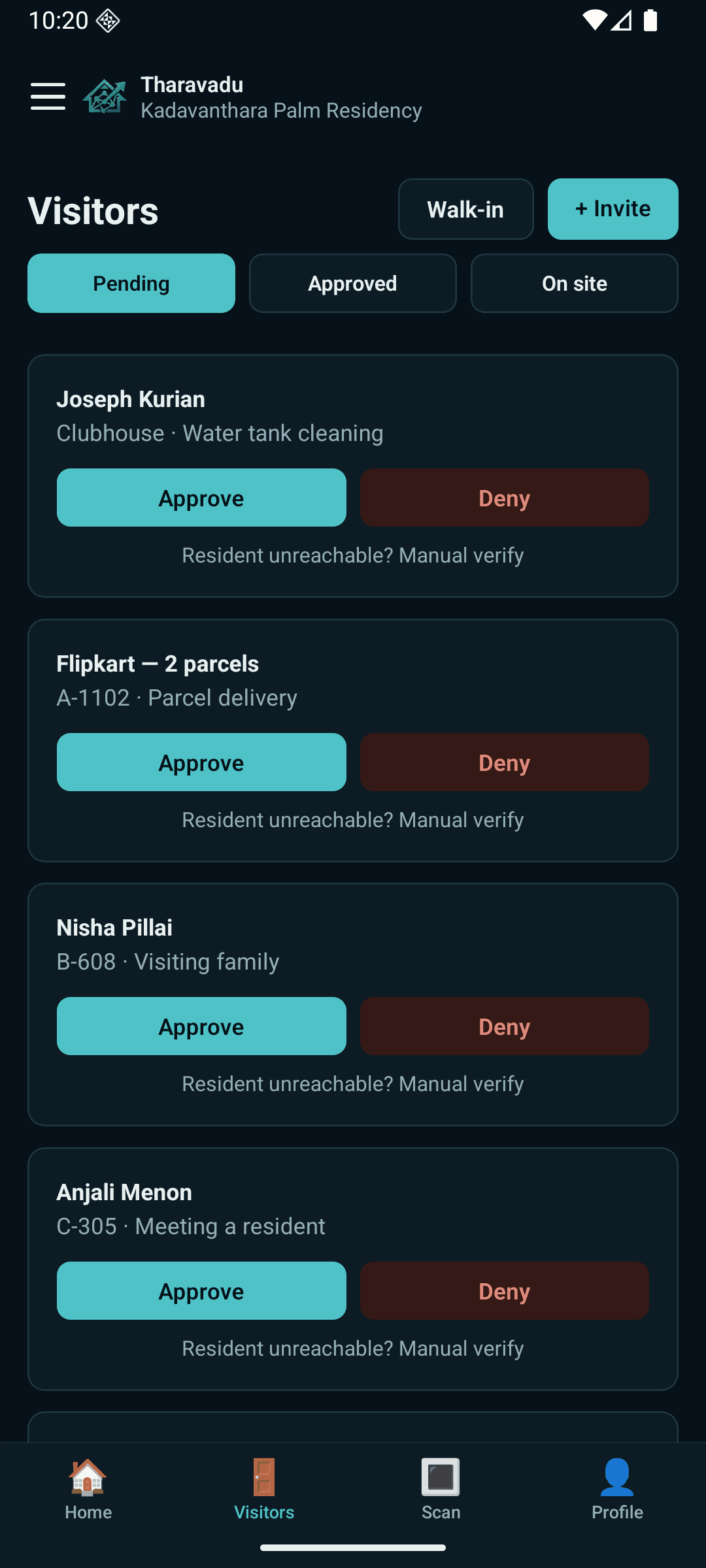
Approve a visitor from wherever you are

The guard logs someone at the gate; you get the request on your phone and approve or deny it. Nobody is left standing at the gate while someone is found.

The whole community in a pocket

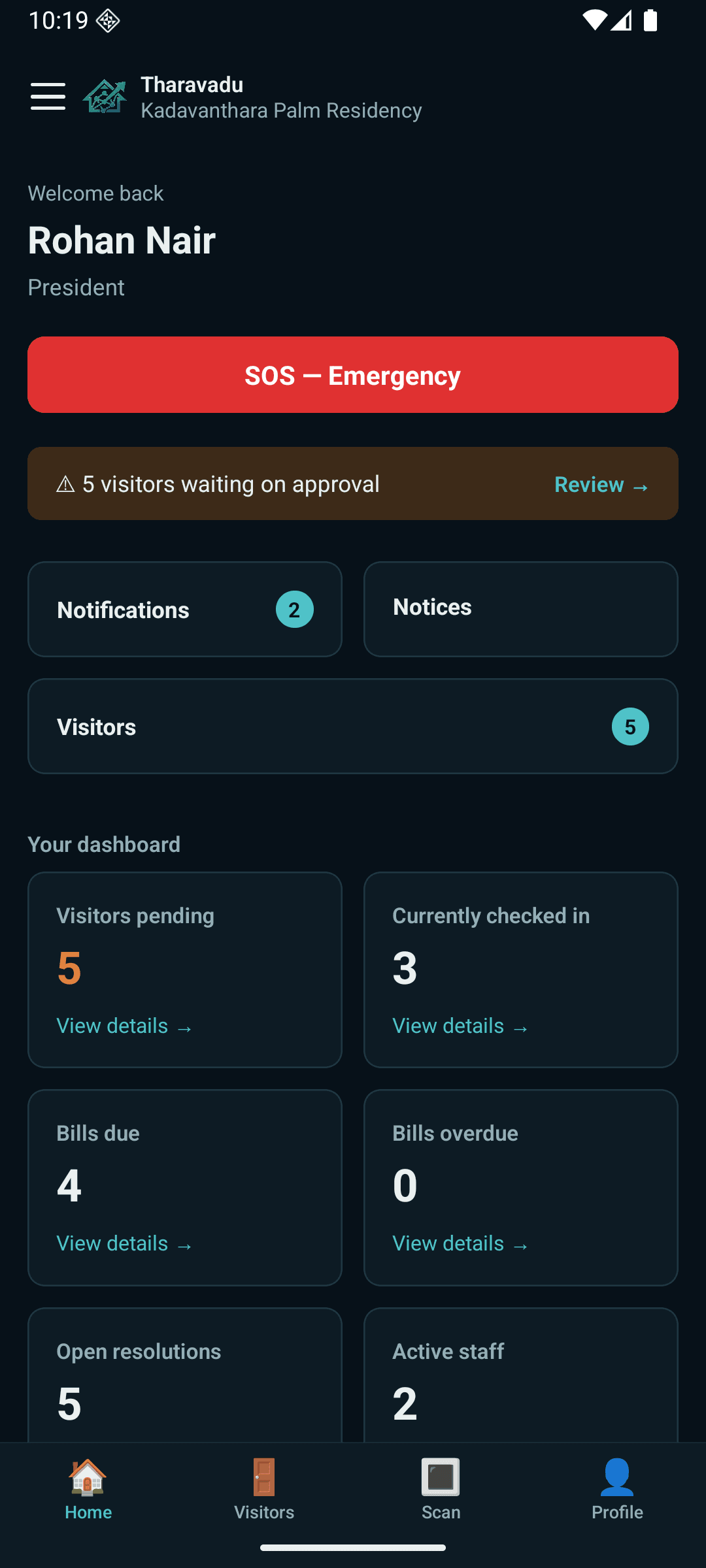
Bills, notices, documents, facility bookings, helpdesk tickets and gate activity — the same records the committee sees on the web, updated at the same moment.

The Emergency SOS screen in the Tharavadu mobile app, with a hold-to-confirm button that notifies security and the committee
Emergency SOS — deliberately hold-to-confirm, so it cannot fire by accident in a pocket.
The Tharavadu mobile home screen showing pending visitors, bills due, open resolutions and active staff
Home — what needs you today, for your role.
The mobile visitors screen showing a pending walk-in visitor with Approve and Deny actions
A walk-in waiting at the gate, approved or denied in one tap.
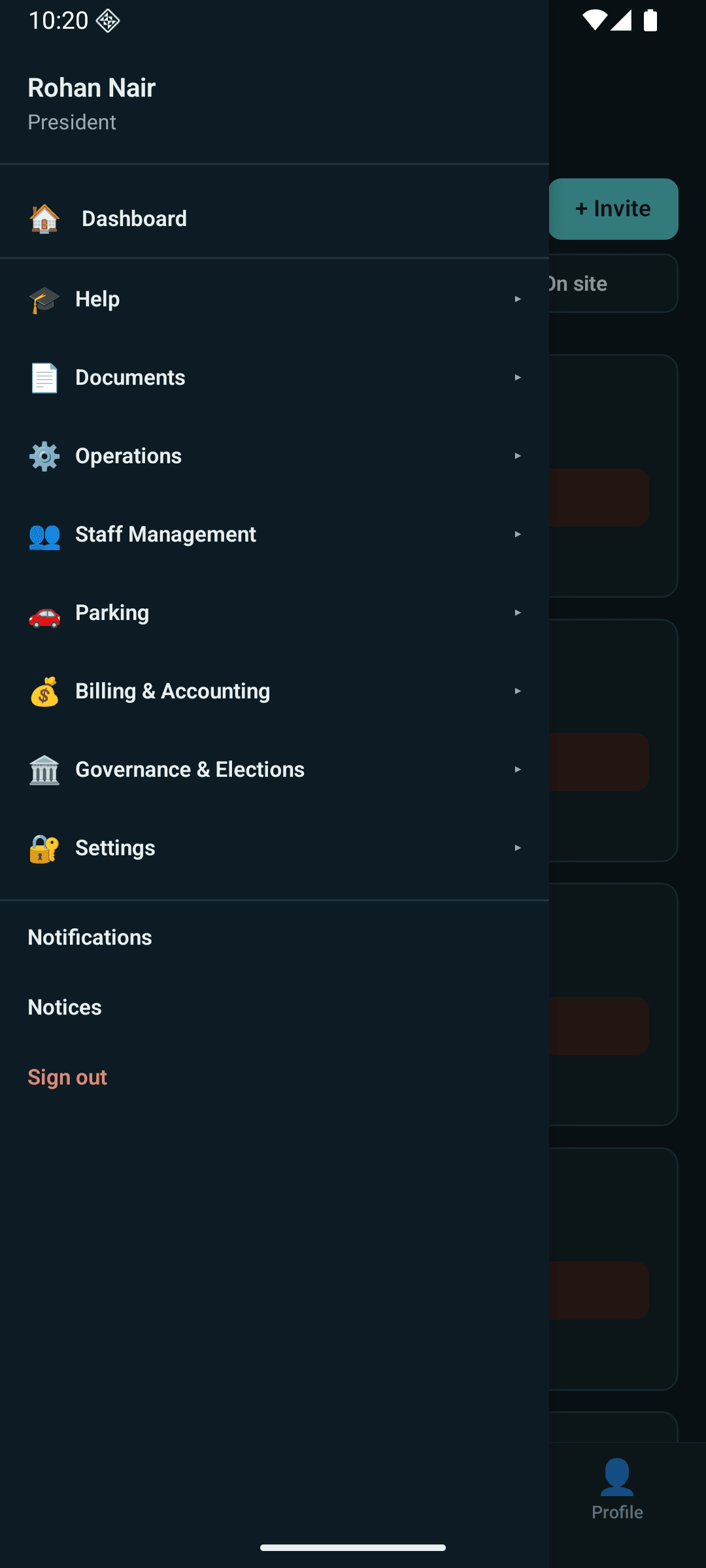
The Tharavadu mobile menu listing the modules available to this member
Only the modules this member's role actually grants.

India-first

Built for how Indian communities actually govern themselves.

Not an international product with a rupee symbol added. The assumptions underneath it are the ones your association already lives with.

Built around associations, not landlords

A residents' association is a self-governing body with elected office-bearers and a term. Roles, approvals and handover are modelled on that — not on a property manager who owns the building.

UPI, the way people already pay

Dues collected the way an Indian household pays for everything else, rather than through a card form designed for somewhere else.

A record that survives the committee

Terms end and office-bearers change. Notices, resolutions, minutes and accounts stay with the community instead of in someone's personal phone.

DPDP-aware by design

Resident data is personal data. Access is scoped by role, and what each person can see is a deliberate decision rather than an afterthought.

How it works

From onboarding to everyday operations.

  1. 1

    Your committee gets set up

    We provision your community's Tharavadu account and issue your first admin logins.

  2. 2

    Configure your property

    Blocks, floors, unit types — the structure your community actually has, not a generic template.

  3. 3

    Add your people

    Residents, staff, security, committee members — each with the access their role actually needs.

  4. 4

    Run day-to-day operations

    Visitors, billing, documents, helpdesk, facilities — all in one place, on web and mobile.

  5. 5

    Govern with a real record

    Notices, meetings, resolutions, votes — decisions that are documented, not just remembered.

In their words

What committees say after making the switch.

It was much easier than we expected.

We were initially a little concerned about introducing a new system to our community, especially because not everyone is comfortable with new technology. But Tharavadu was very easy to understand and use. The onboarding team guided us through everything step by step, and the transition was much smoother than we expected. Even after going live, their team has continued to support us. Having a dedicated Customer Success Manager we can reach out to whenever we have a question has made a big difference.

ShameemPresident, Cloud 9 Housing Association

It has made everyday community life much easier.

Before Tharavadu, a lot of things were happening through WhatsApp messages, phone calls and spreadsheets. It was easy for things to get missed or lost in the conversations. With Tharavadu, everything is much more organised. Residents can raise requests, check updates, make payments and get important information without having to ask someone every time. For the committee as well, it gives us a much clearer picture of what is happening in the community. It has simply made our day-to-day work a lot less complicated.

AjeshSecretary, Vintage Villas

Where we are

Built for real communities. Early, and honest about it.

Tharavadu is a young product, and the two associations above are early ones — we'd rather show you exactly who is using it than imply a customer list we don't have yet. What we can also show you is the product itself: every screen on this page is real software, running today.

Frequently asked

Common questions about Tharavadu.

Tharavadu is a residential community management platform for India, connecting residents, committees, staff, security, and vendors in one place — covering visitor management, documents, billing and accounting, governance, facilities, helpdesk, and staff/vendor operations, on web and mobile.

Yes. The mobile app covers visitor gate check-in, facility booking, helpdesk requests, notices, billing, and role-gated access for residents, security, and staff. It isn't yet published on public app stores — see the Download page for the current status.

Tharavadu doesn't have fixed public pricing yet. Plans are sized to a community's unit count and module needs — talk to us on the Pricing or Contact page for a number.

Visitor management, documents, billing & accounting, governance (notices, meetings, e-voting resolutions), facilities booking, helpdesk, staff & vendor management, and cross-module operations intelligence — see the Features page for the full, honestly-labeled list.

Yes. Tharavadu is built around Indian residents' association governance — Societies Registration Acts, RERA obligations, and DPDP Act 2023 data-protection requirements — rather than adapted from a generic international product.

Residential communities in India — residents, committee members (Secretary/Treasurer/President), security staff, on-site staff, and vendors — see the Solutions pages for each audience.

Bring your community together.

Less chasing. Less paperwork. Less confusion. More time for the people and the place that matter.